Japanese Incense Sachet-Making Experience
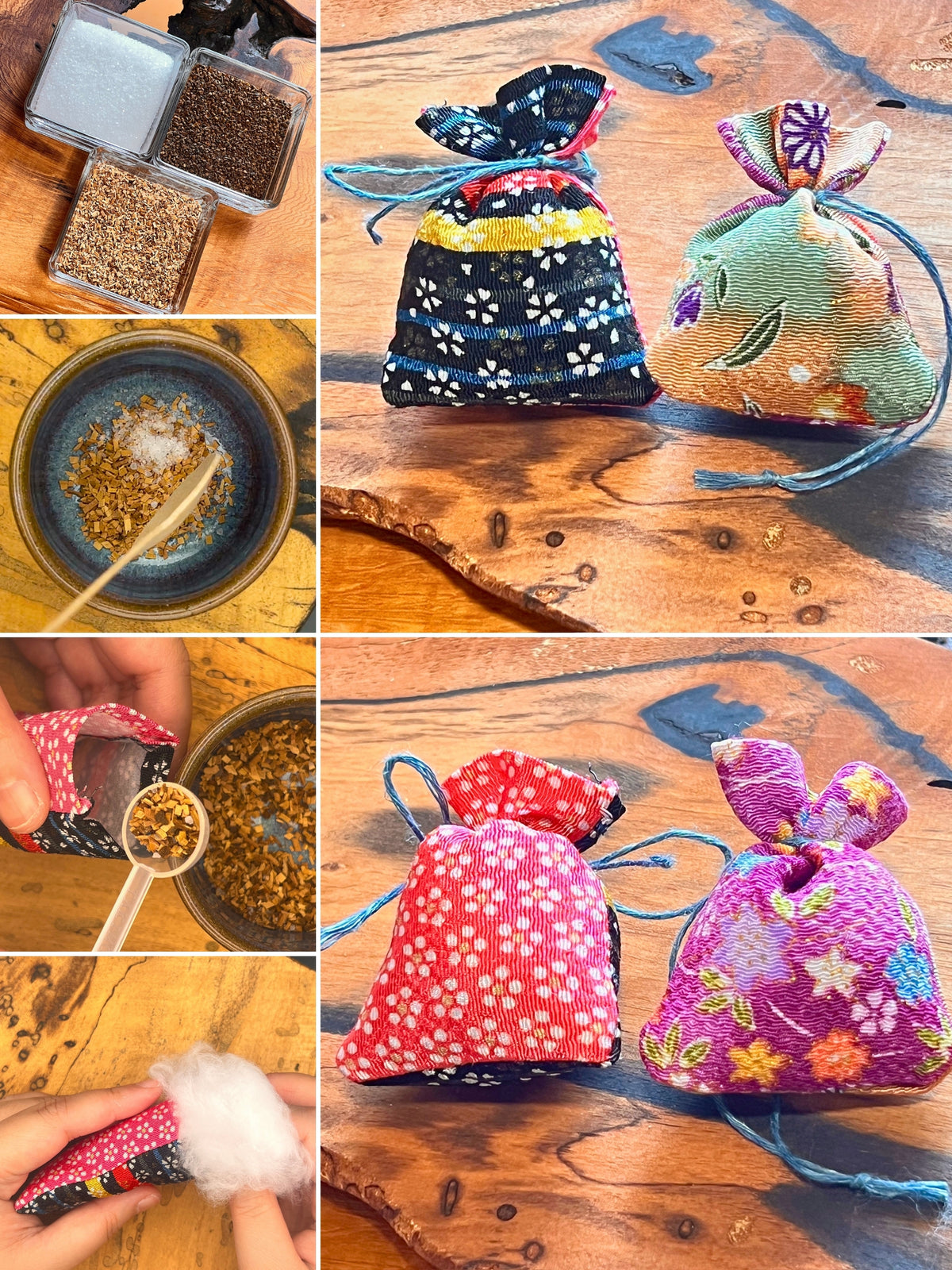
● Discover the art of traditional Japanese incense in a beautiful setting overlooking Mount Fuji, just a five-minute walk from Kawaguchiko Station.
● Held daily, this two-hour cultural experience is conducted in English, with expert guidance throughout. No previous experience is required.
● Choose from an exquisite selection of Japanese fabrics and hand-sew two incense sachets, each with a different design on the front and back.
● Explore ten carefully selected natural incense ingredients and create two fragrances of your own, guided by an experienced incense specialist.
● Take home two individually handcrafted incense sachets, each entirely unique to you.
Experience Overview
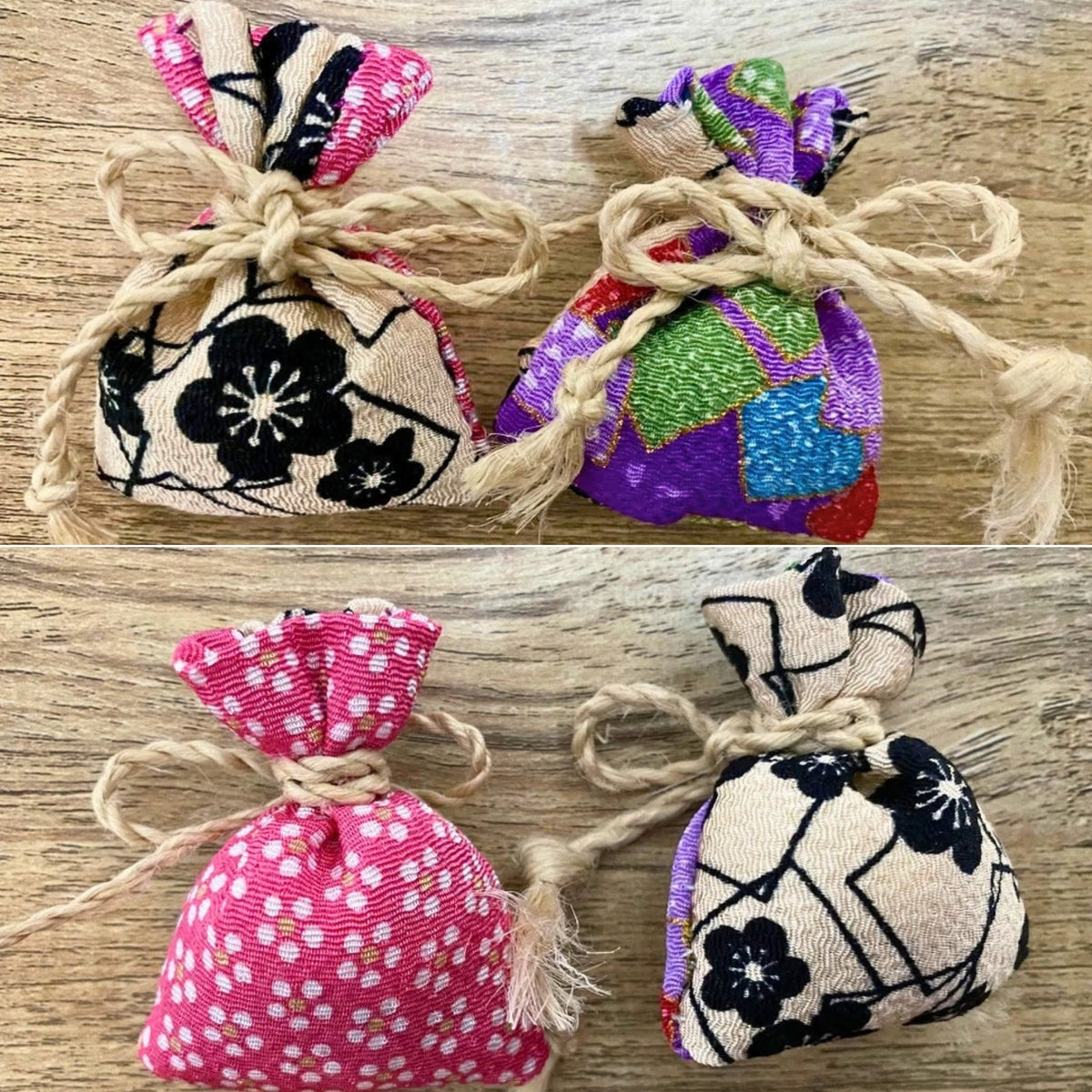
Upon Arrival | Introduction: The History and Spirit of Fuji Worship
Discover the Art of Japanese Incense Blending and Create Two Fragrances of Your Own
Immerse yourself in Japan’s traditional incense culture as you create two beautifully handcrafted incense sachets.
Begin by choosing from an extensive collection of Japanese fabrics, then hand-sew two individual pouches. Explore ten exquisite natural incense ingredients, including premium Mysore sandalwood and natural borneol, discovering their distinctive characteristics and aromas.
With guidance from an incense specialist, blend two fragrances entirely to your own taste. From selecting fabrics and stitching each pouch to composing your fragrances and adding the finishing touches, every stage offers an opportunity to express your own sense of beauty and creativity.
+15 min | Selecting Your Fabrics
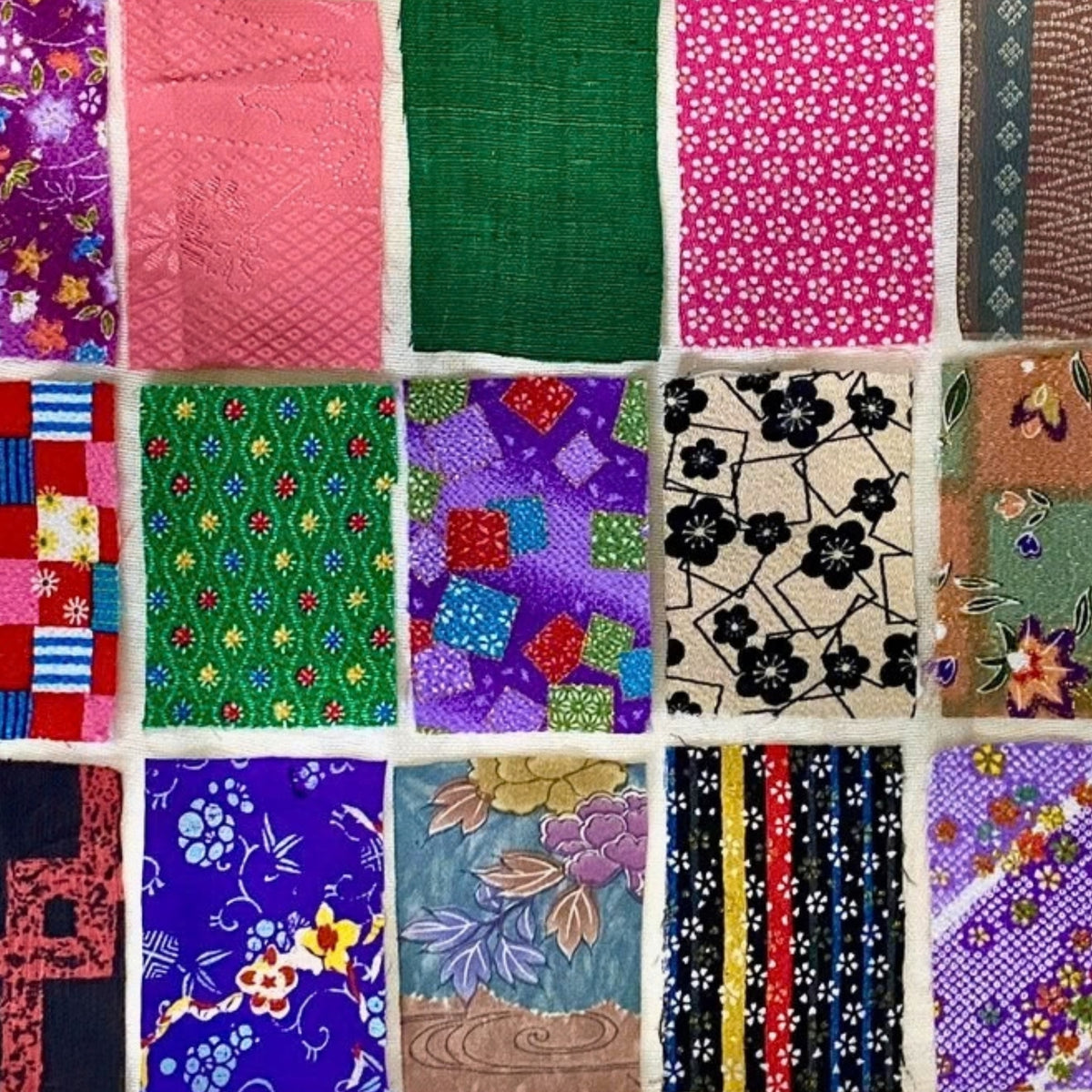
Begin by choosing from an extensive collection of Japanese fabrics, rich in colour, pattern and texture.
You will select four pieces of fabric to create two incense sachets, each featuring a different design on the front and back. From timeless traditional motifs to vibrant, intricate patterns, discover the combinations that most appeal to your personal sense of style.
Each piece has been prepared with interfacing and seam allowances, allowing even complete beginners to create beautifully shaped pouches.
+25 min | Traditional Japanese Hand-Sewing
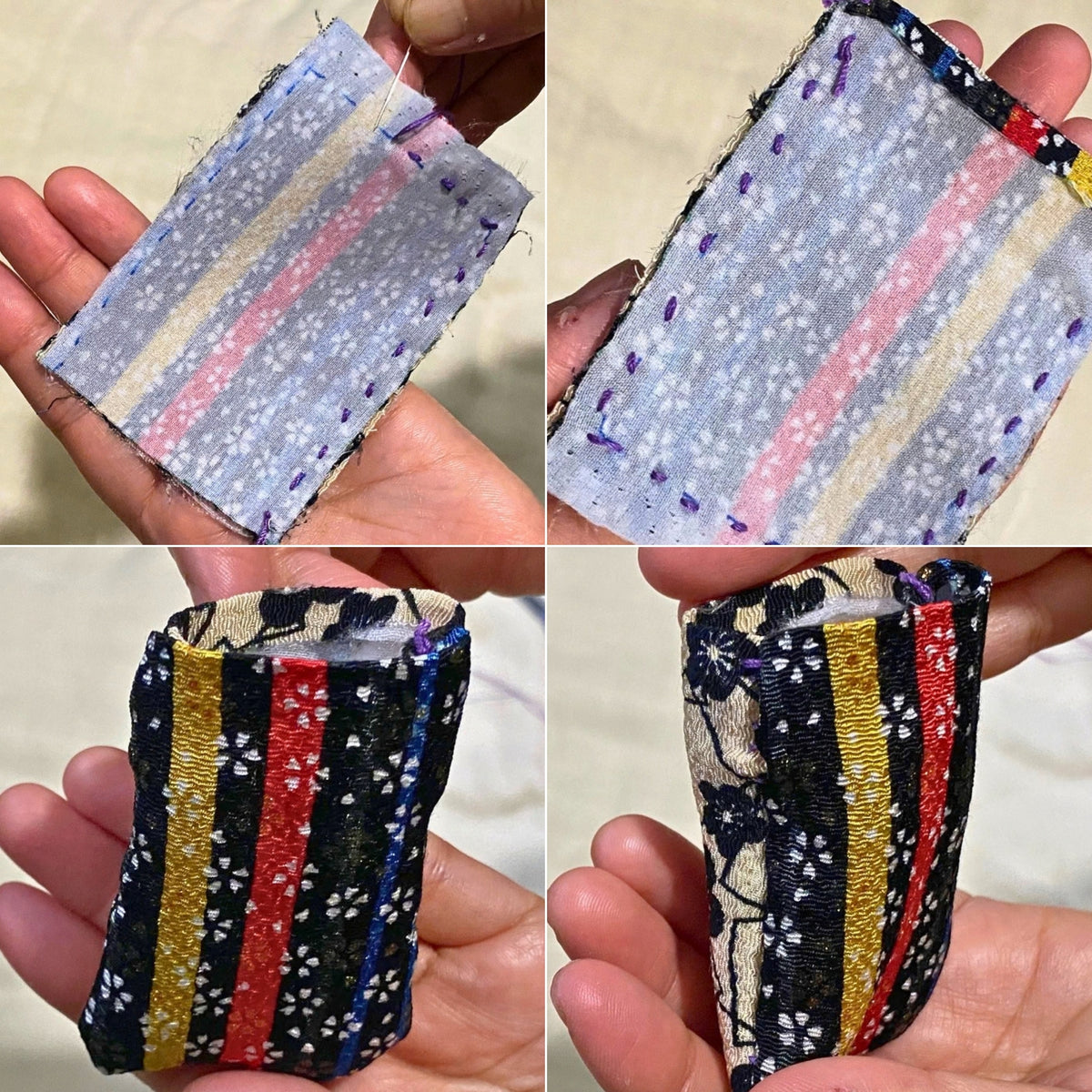
Stitch your chosen fabrics together, one careful stitch at a time, to create two individual incense sachets.
Choose your own thread colours to complement the patterns on each side, exploring the subtle harmony of colour and design while discovering the techniques of traditional Japanese hand-sewing.
Every stage is carefully demonstrated and explained, from handling the needle to completing the final stitches. No previous sewing experience is necessary.

+70 min| Exploring Natural Incense Ingredients
Discover ten carefully selected natural incense ingredients, including prized aged sandalwood from Mysore, India, and natural borneol.
Experience each aroma individually: the mellow sweetness of sandalwood, the cool clarity of borneol and the warm, spicy character of clove. Learn to recognise their distinctive qualities and discover the fragrances that most appeal to you.
For incense sachets, we use kizami — aromatic woods and botanicals cut into small pieces rather than finely ground.
Their natural shapes and textures remain visible, offering an opportunity to appreciate the ingredients not only through their fragrances, but also through their appearance and tactile qualities.
+80 min | Blending Two Fragrances
Using a small spoon, gradually combine your chosen incense ingredients, pausing to experience how their aromas change and develop with each addition.
You will create two distinct fragrances, each using a total of five spoonfuls of ingredients. There is no fixed recipe. Your incense specialist will explain the individual qualities of each ingredient and offer guidance on achieving a balanced composition, leaving you free to follow your own preferences.
We recommend creating one gentle, sweet fragrance and another with a fresh, uplifting character.
Place the sweeter sachet beside your pillow to enjoy its comforting aroma during a quiet moment of relaxation. The fresher fragrance can be tied to your bag and carried as a small personal charm.
Two individual fragrances, each designed to accompany different moments in your everyday life.
+100 min | Finishing Your Incense Sachets
With your two hand-sewn pouches and two fragrances complete, the final stage brings everything together.
Fill each pouch with its own carefully blended incense ingredients, adding a little soft cotton wadding to create a gently rounded shape. Finish each sachet with fine thread made from 100% premium hemp.
Choose between two styles: a delicate bow tied at the front, or a looped cord that allows your sachet to be attached to a bag or other personal belongings.
From selecting the fabrics and placing each stitch to composing the fragrances and tying the final knots, every detail bears the mark of your own creativity.
Take home two unique incense sachets, carrying the fragrances and memories of your encounter with Japan’s traditional crafts and incense culture.
Confirmation of Consent
Cancellation Policy
Materials for the Workshop are purchased and prepared in advance for each participant. The venue is also reserved in advance, and cancellation charges may be incurred if a booking is cancelled.
For these reasons, the following cancellation policy applies.
1. Cancellation Fees
More than 7 days before the scheduled start time of the Workshop:
A full refund of the participation fee will be issued, less the payment processing charge described below. *
From 7 days to more than 24 hours before the scheduled start time of the Workshop:
A refund of 50% of the participation fee will be issued, less the payment processing charge described below. *
24 hours or less before the scheduled start time of the Workshop, including failure to attend without prior notice:
No refund will be issued.
* A payment processing charge of 3.6% of the participation fee will be deducted from all refunds.
2. Cancellation by the Organiser
If the Workshop is cancelled by the Organiser, the participation fee paid to the Organiser will be refunded in full.
The Organiser shall not be responsible for any additional expenses incurred by participants, including travel, accommodation, transportation, or other related costs.
If the Workshop cannot be held due to severe weather, a natural disaster, an infectious disease outbreak, transport disruption, or another event beyond the Organiser’s reasonable control, the Organiser may offer either:
a full refund of the participation fee; or
the opportunity to transfer the booking to another available date.
The available option will be communicated to affected participants as soon as reasonably possible.
3. Cancellation Requests
To cancel your booking, please contact us through the contact form on our website.
Your cancellation will be considered received when the Organiser receives your cancellation request.
The applicable cancellation fee will be calculated based on the scheduled start time of the Workshop and the time at which the cancellation request is received.
Disclaimer
By registering for the Japanese cultural experience “Mount Fuji Japanese Craft Workshop” (the “Workshop”), organised by kototama (the “Organiser”), you confirm that you have read, understood, and agreed to the following terms and disclaimer.
Article 1 – Voluntary Participation and Personal Responsibility
Participation in the Workshop is voluntary.
Each participant is responsible for determining whether they are physically and medically fit to participate, taking into account their health, physical condition, allergies, pre-existing medical conditions, disabilities, pregnancy, sensitivity to fragrances, and any other relevant circumstances.
Participants must follow the safety instructions provided by the instructor and inform the Organiser in advance of any condition or circumstance that may require assistance, accommodation, or additional safety precautions.
Article 2 – First Aid and Medical Assistance
The Organiser will keep a basic first-aid kit at the venue, including disinfectant, adhesive plasters, eyewash, and other basic supplies.
Where reasonably possible, the Organiser may provide basic first aid for minor injuries.
The Organiser is not a medical institution, and no doctor, nurse, or other medical professional is permanently present at the venue.
In the event of an emergency, the Organiser will make reasonable efforts to contact emergency services, including calling 119 where appropriate, or to direct the participant to a nearby medical facility.
Any medical expenses, treatment costs, transportation costs, or other expenses arising from illness, injury, an allergic reaction, or a deterioration in health during or after the Workshop shall be borne by the participant, except where otherwise required by applicable law.
Visitors to Japan are strongly encouraged to obtain comprehensive travel insurance that includes medical and emergency transportation coverage.
Article 3 – Risks and Safety Measures
# Japanese Sewing Experience
## Risks
Sewing needles and other sewing tools are used during the experience. There is a risk of minor puncture wounds or injuries to the fingers.
## Safety Measures
Thimbles are provided to all participants, and their use is recommended.
The instructor will explain how to handle sewing needles and tools safely before the experience begins.
If a minor finger injury occurs, disinfectant and adhesive plasters will be available.
A magnetic needle picker is available if a needle is accidentally dropped.
Participants must notify the instructor immediately if a needle or other sharp object is lost or dropped.
# Incense-Making Experience
## Risks
The fragrances released by incense ingredients may cause headaches, nausea, respiratory discomfort, or other adverse reactions in some individuals.
Participants who are pregnant, sensitive to fragrances, or affected by asthma, allergies, or respiratory conditions should exercise particular caution.
Certain incense ingredients may cause skin irritation or an allergic reaction in rare cases.
## Safety Measures
The room will be adequately ventilated throughout the experience.
Participants who feel unwell must inform the instructor immediately and stop handling the materials.
A separate resting area will be available where reasonably possible.
A list of the principal incense ingredients used during the experience will be made available before booking and will also be provided after the booking has been confirmed.
Participants with allergies or sensitivities are encouraged to review the ingredient information before making a reservation and to contact the Organiser if they have any concerns.
Latex-free nitrile gloves are available for participants who wish to avoid direct skin contact.
# Refreshments
## Risks
Light refreshments featuring local products or specialities from Yamanashi Prefecture may be served during the Workshop.
Participants with food allergies, intolerances, religious dietary requirements, or other dietary restrictions must inform the Organiser when making their reservation.
Although reasonable precautions will be taken, the Organiser cannot guarantee that refreshments will be completely free from trace allergens or cross-contamination.
## Safety Measures
Information about the principal ingredients used in the refreshments is available upon request before the Workshop.
Participants should not consume any food or drink if they are uncertain whether it is suitable for them.
Article 4 – Health Considerations
Participants are advised to consult a doctor or other qualified healthcare professional before participating if any of the following applies:
pregnancy or breastfeeding;
heart disease, respiratory disease, asthma, skin conditions, allergies, or another medical condition;
sensitivity to fragrances, pigments, foods, or natural materials;
a disability or health condition that may affect safe participation;
a condition for which assistance, supervision, medication, or reasonable accommodation may be required; or
any other concern that may affect the participant’s ability to participate safely.
Participants must bring and manage any medication they may require, including prescribed medication, inhalers, or emergency allergy medication.
The Organiser cannot administer prescription medication on behalf of participants.
Article 5 – Damage Caused by Participants
Participants shall be responsible for any loss or damage that they intentionally or negligently cause to:
other participants;
instructors or other members of staff;
third parties;
the venue;
tools, equipment, materials, or furnishings; or
any other property.
Participants must use the venue, tools, equipment, and materials only as instructed.
Article 6 – Photography and Video Recording
The Organiser may photograph or record the Workshop for documentation or promotional purposes.
Where a participant may be identifiable, the Organiser will obtain the participant’s consent before using the relevant photograph or recording for promotional or public-facing purposes.
A participant may decline to be photographed or recorded without affecting their ability to participate in the Workshop.
Participants may take photographs or videos for personal use, provided that they respect the privacy, dignity, intellectual property, and personal preferences of other participants, instructors, and third parties.
Photographs or recordings of another identifiable person must not be published or shared publicly without that person’s permission.
Article 7 – Limitation of Liability
To the fullest extent permitted by applicable law, the Organiser shall not be liable for:
loss, damage, delay, or disruption caused by events beyond the Organiser’s reasonable control, including severe weather, natural disasters, infectious disease outbreaks, transportation disruption, power failures, or government restrictions;
illness, injury, an allergic reaction, or another adverse event arising from a medical condition, allergy, sensitivity, or other relevant circumstance that the participant did not disclose before the Workshop;
damage to clothing or personal belongings caused by pigments, incense ingredients, food, liquids, or other materials used during the Workshop, except where caused by the Organiser’s intentional misconduct or negligence;
loss, theft, or damage to personal belongings at the venue; or
any accident, injury, loss, delay, or theft occurring while travelling to or from the venue.
Nothing in this Disclaimer excludes or limits any liability that cannot lawfully be excluded or limited under the laws of Japan.
Nothing in this Disclaimer affects any statutory rights available to participants under applicable consumer protection laws.
Article 8 – Governing Law and Jurisdiction
This Disclaimer, the Cancellation Policy, and any dispute arising out of or in connection with the Workshop shall be governed by and construed in accordance with the laws of Japan.
Any dispute arising out of or in connection with the Workshop shall be subject to the exclusive jurisdiction of the Kofu District Court as the court of first instance, except where otherwise required by applicable law.
Privacy Policy
kototama Inc. (hereinafter referred to as the “Association”) considers the proper handling and protection of personal information obtained through the website it operates and the activities and services it provides to be an important responsibility.
This Privacy Policy sets out how the Association collects, uses, manages, provides to third parties and otherwise handles personal information.
Article 1 — Scope
This Privacy Policy applies to the handling of personal information in connection with the website operated by the Association, enquiry forms, reservation procedures, Japanese cultural experiences, classes, courses and other activities and services provided by the Association.
For information on how personal information is handled by third-party websites or services linked from this website, please refer to the privacy policy of the relevant operator.
Article 2 — Information We Collect
The Association may collect the following information to the extent necessary to provide its activities and services.
1. Information Provided Directly by You
Name
Email address
Telephone number
Address, country or region of residence
Preferred language
Date and time of reservation
Number of participants
Names of participants
Preferred experience or activity
Details of enquiries, consultations and other communications
Information required to process changes to reservations, cancellations or refunds
Survey responses, feedback and other information provided voluntarily
Any other information necessary to provide an activity or service
2. Information Relating to Reservations and Payments
This website accepts reservations for the Association’s activities and services, but participation fees are not paid through the website.
The Association does not collect or store credit card numbers, bank account numbers or other payment credentials as part of the reservation process on this website.
Where an external financial institution, money transfer service or other service is used to pay a participation fee, information entered through that service will be handled in accordance with the terms of use and privacy policy of the relevant service provider.
To the extent necessary to manage reservations and participation fees, the Association may obtain information concerning transaction status, including whether payment has been made, the amount paid, the date of payment and whether a refund has been issued.
3. Information Relating to Health, Safety and Necessary Adjustments
To ensure the safety of participants and provide any necessary adjustments, the Association may, with the individual’s consent, collect the following information:
Information concerning allergies or sensitivities
Information concerning medical history, medical conditions or other aspects of health
Information concerning pregnancy or breastfeeding
Information concerning disabilities, physical limitations or required assistance
Information concerning food allergies, dietary restrictions or religious dietary requirements
Information necessary for responding to an emergency
Any other information necessary to enable safe participation
This information will be used solely for necessary safety measures, confirmation of the suitability of materials, reasonable adjustments, emergency response and other purposes required to protect participants’ safety.
The Association will not request health information beyond what is necessary for participation in the relevant activity.
4. Photographs and Video Recordings
The Association may take photographs or video recordings for the purpose of documenting or promoting its activities.
As a general rule, the Association will obtain the individual’s prior consent before using identifiable photographs or video recordings on this website, social media, printed materials or other promotional media.
Consent to photography, filming or promotional use is voluntary. A person’s decision not to consent will not result in any unreasonable restriction on their participation in an activity or service.
5. Information Collected Automatically Through Use of the Website
The Association may automatically collect the following information when this website is used:
IP address
Browser and device information
Operating system
Pages viewed
Date and time of access
Referring website or page
Information collected through cookies and similar technologies
Actions taken and usage activity on this website
Article 3 — Purposes for Which Personal Information Is Used
The Association uses the personal information it collects for the following purposes:
To respond to enquiries, consultations and requests
To receive, confirm, amend and cancel reservations
To provide Japanese cultural experiences, classes, courses and other activities and services
To provide participants with guidance, communications and necessary notices
To prepare materials, venues, instructors and other arrangements necessary to conduct activities
To confirm the status of payments and refunds relating to participation fees
To ensure participants’ safety, provide health-related adjustments and respond to emergencies
To verify identity and prevent unauthorised or fraudulent use
To maintain and improve the quality of activities and services
To conduct surveys, analyse usage and prepare statistical information
To maintain the website, ensure its security and respond to technical problems
To provide information about the Association’s activities, events and related matters
To respond to requests from courts, administrative authorities and other public bodies in accordance with applicable laws and regulations
To respond to disputes, accidents, complaints and other issues
For purposes incidental to those listed above
Ongoing information and promotional communications by email will be sent only where the individual has given consent or where permitted by applicable laws and regulations.
Individuals who no longer wish to receive such communications may unsubscribe using the relevant procedure or contact the Association to request that they be discontinued.
Article 4 — Handling of Special Care-Required Personal Information
Information concerning health conditions, medical history, disabilities and other matters that may constitute special care-required personal information will be collected with the individual’s prior consent, except where otherwise permitted by applicable laws and regulations.
Access to such information will be limited to those who require it in order to assist participants or manage safety.
The information collected will not be used beyond what is necessary to provide activities safely, make required adjustments, respond to accidents or emergencies and fulfil other necessary purposes.
Article 5 — Provision to Third Parties
The Association will not provide personal data to a third party without the individual’s consent, except in the following circumstances:
Where required or permitted by applicable laws and regulations
Where necessary to protect a person’s life, physical wellbeing or property and it is difficult to obtain the individual’s consent
Where particularly necessary to improve public health or promote the sound development of children and it is difficult to obtain the individual’s consent
Where cooperation is necessary for a national or local government body, or a person acting on its behalf, to carry out duties prescribed by law
In connection with a merger, transfer of business or other comparable circumstances
In any other circumstances permitted by applicable laws and regulations
The Association does not sell personal information for financial consideration.
Article 6 — Outsourcing and Use of External Services
The Association may entrust the handling of personal information to external service providers to the extent necessary to achieve the purposes described in this Privacy Policy.
Such service providers may include:
Providers involved in the operation and management of the website
Providers of reservation information management services
Providers of email, cloud storage and communications services
Providers involved in website maintenance and administration
Providers of website analytics and advertising performance measurement services
Financial institutions, money transfer services and other providers required to receive participation fees
Accounting, legal and other professional advisers
Venues, instructors and other collaborators required to conduct activities
The Association selects its service providers appropriately and, where necessary, requires them through contractual or other measures to handle personal information securely. The Association also exercises appropriate oversight of such providers.
Article 7 — Handling of Personal Information Outside Japan
Depending on the website operation services, reservation management services, cloud services, website analytics services and other external services used by the Association, personal information may be stored on servers located outside Japan or processed by service providers located outside Japan.
In such circumstances, the Association will take appropriate measures in accordance with applicable laws and regulations, including providing any required information, obtaining consent and implementing contractual safeguards.
Article 8 — Cookies and Website Analytics
1. Use of Cookies
This website may use cookies and similar technologies for purposes including displaying the website, retaining language settings, providing reservation functions, ensuring security and understanding how the website is used.
Some cookies are necessary for the basic operation of the website, while others may be used for website analytics or measuring advertising performance.
Users may disable cookies through their browser settings. However, disabling cookies may prevent certain parts of the website from functioning correctly.
2. Google Analytics
This website may use Google Analytics to understand how the website is used and to improve its content and usability.
Google Analytics may use cookies and similar technologies to collect information such as the pages viewed, the date and time of access, device and browser information, approximate location and other usage information.
For information on how Google handles information, please refer to Google’s privacy policy and related explanations.
3. Google Ads
The Association may use Google Ads to communicate information about its activities and to measure visits to this website, enquiries, reservations and other outcomes resulting from advertisements.
In doing so, Google or its related service providers may collect information using cookies and similar technologies.
Where the Association uses personalised advertising, remarketing or other advertising features for which the individual’s consent is required by law, the Association will provide the necessary information and obtain consent in an appropriate manner.
4. Cookie Preferences
Where a cookie consent banner or privacy settings function is displayed on this website, users may use it to select or change their preferences regarding the use of non-essential cookies.
Article 9 — Retention Period
The Association retains personal information only for the period necessary to achieve the purposes for which it was collected and for any period required by applicable laws and regulations.
The retention period is determined by taking into account the nature of the information, the purpose for which it is used, the status of reservations and participation, the need to respond to accidents or disputes and any applicable legal obligations.
Health information and other information collected for safety-related purposes will be securely deleted or anonymised once the relevant activity, safety checks, accident response and other necessary procedures have been completed, unless there is a legitimate need to retain it for a longer period.
Article 10 — Security Measures
The Association takes necessary and appropriate security measures to prevent unauthorised access to, disclosure, loss, destruction, damage, alteration or misuse of personal information.
These security measures include:
Restricting access to personal information
Properly managing passwords and other authentication credentials
Ensuring the security of communications and systems
Appropriately selecting and overseeing service providers
Properly deleting or disposing of information that is no longer required
Establishing procedures for responding to data breaches and similar incidents
Article 11 — Requests for Disclosure, Correction, Deletion and Other Action
In accordance with applicable laws and regulations, individuals may make the following requests concerning their personal information held by the Association:
Notification of the purposes for which the information is used
Disclosure of personal information or records concerning its provision to third parties
Correction, addition or deletion of information
Suspension of use or erasure
Suspension of provision to third parties
Withdrawal of consent
Any other request permitted under applicable laws and regulations
To make a request, please contact the enquiry point stated at the end of this Privacy Policy.
After verifying the identity of the person making the request, the Association will respond within a reasonable period and in accordance with applicable laws and regulations.
Where the Association is unable to comply with a request under applicable laws and regulations, it will explain the reason.
Article 12 — Personal Information Relating to Minors
Where a minor uses an activity or service provided by the Association and provides personal information, the consent of a parent, guardian or other legal representative should be obtained where necessary.
Depending on the nature of the activity, the participant’s age and the nature of the information collected, the Association may require the consent or attendance of a parent or guardian.
Article 13 — Links to External Websites
This website may contain links to websites operated by third parties.
The Association is not responsible for the handling of personal information on third-party websites.
Please review the privacy policies and terms of use of the relevant linked websites.
Article 14 — Changes to This Privacy Policy
The Association may amend this Privacy Policy as necessary in response to changes in applicable laws and regulations, changes to its activities or services, or other circumstances.
Where a material change is made, the Association will provide notice through this website or by another appropriate method.
The amended Privacy Policy will take effect on the date it is published on this website or on any other date separately specified.
Article 15 — Contact
For enquiries concerning the handling of personal information, this Privacy Policy, requests for disclosure or other privacy-related matters, please contact us through the enquiry form on this website.
General Incorporated Association kototama
Representative Director: Haruka Shimura
Address:
Arai Daini Building 802
1-28-22 Atago, Ageo-shi
Saitama 362-0034
Japan
Contact method: Enquiry form on this website
Established: 5 August 2026
Last revised: 5 August 2026
Your Experience
Visitor Information
Included During the Experience
- English-language guidance throughout the experience, informed by knowledge of Japanese cultural history, neuroscience and human movement.
- A clear instructional video, accompanied by step-by-step printed guides in English and Traditional Chinese.
- High-speed Wi-Fi is available at the venue.
Clean and well-maintained toilet facilities are available at the venue.
- Drinking water is provided at no additional charge.
Space is available for coats, bags and personal belongings.
- A calm and welcoming environment for small groups, allowing time for attentive guidance and a relaxed, unhurried experience.
- On clear days, views of Mt Fuji may be enjoyed from the venue.
Venue | 6-Minute Walk from Kawaguchiko Station
The venue is a 5-minute walk from Kawaguchiko Station.
For the privacy and security of the venue, the full address will be provided once your booking has been confirmed.
Experience Highlights
Good to Know
- All tools and materials required for the workshop are provided and are included in the participation fee.
- The workshop is held in a small-group setting, allowing time for attentive guidance throughout the experience.
- Guidance and explanations are provided entirely in English.
- The workshop is held indoors and can therefore usually proceed comfortably in most weather conditions.
- The experience is suitable for complete beginners, and no previous experience is required.
- All items made during the workshop may be taken home on the day.
- The naturally dyed cloths may still be drying at the end of the workshop. Simple instructions will be provided on how to transport them safely and care for them at home.
- Wi-Fi and refreshments are available at the venue at no additional charge.
- Clean and well-maintained toilet facilities are also available.
What to Bring
- Comfortable clothing suitable for practical craft activities.
- A smartphone or camera, should you wish to photograph your creations or the workshop. When taking photographs, please respect the privacy and preferences of other participants.
- Reading glasses, if required for detailed handcraft work.
Accessibility & Visitor Information
- Age Requirements
There is no fixed minimum age for this experience. However, participants must be able to follow the instructor’s safety guidance and take part in the activities safely.
Children must be accompanied and closely supervised by a parent or guardian throughout the experience.
Young children who are not taking part may accompany a participating parent or guardian only by prior arrangement and must remain under the adult’s close supervision at all times.
As space at the venue is limited, we kindly ask that adults who are not participating do not accompany participants unless this has been agreed with us in advance.
- Pets and Assistance Dogs
Pets are not permitted at the venue.
Guide dogs, mobility assistance dogs and hearing dogs recognised under applicable requirements are welcome.
If you plan to attend with an assistance dog, you are welcome to contact us in advance through the contact form so that we can discuss any arrangements that may help make your visit as comfortable as possible.
- Accessibility
If you have any accessibility requirements or require additional assistance, please contact us before making your reservation. We will be pleased to discuss your individual requirements and consider reasonable adjustments wherever practicable.
The workshop takes place on the ground floor. Please contact us in advance if you require step-free access, mobility assistance, seating arrangements, communication support or any other accommodation, as the suitability of the venue and the available arrangements will depend on your individual requirements.
The activities involve detailed handcraft work and the use of sewing needles, Bengala earth pigments and aromatic ingredients. For this reason, some adjustments may not be possible, or an alternative method of participation may need to be considered.
We encourage you to contact us in advance so that we can explain the activities, discuss any safety considerations and consider appropriate arrangements wherever reasonably practicable.
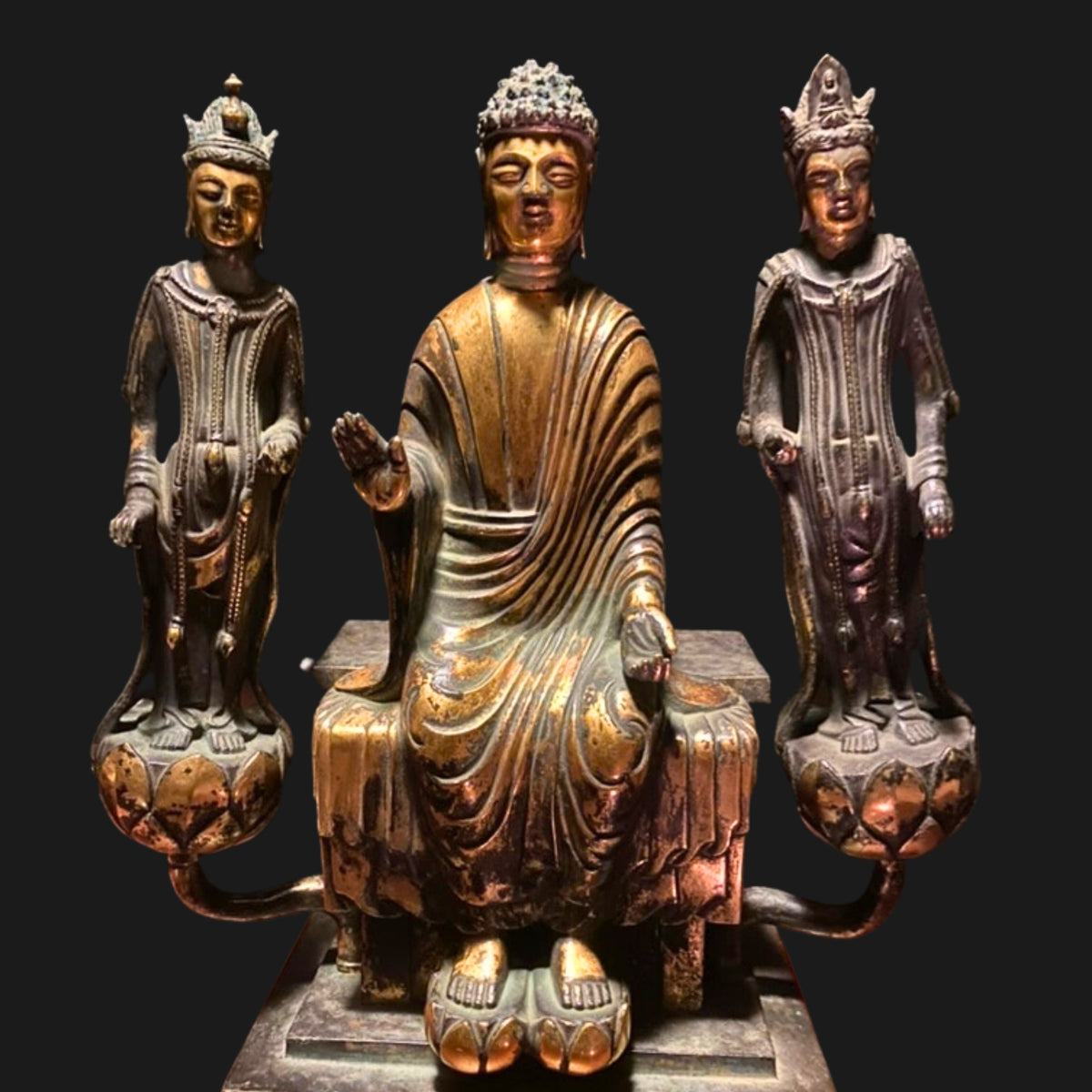
Asuka Period (538–710) – The Arrival of Incense in Japan
The history of incense in Japan is closely intertwined with the introduction of Buddhism. When Buddhism was traditionally said to have been officially introduced to Japan in 538, incense is believed to have arrived alongside it.
One of Japan’s earliest legends concerning incense tells of a piece of fragrant wood that washed ashore on Awaji Island. When the wood was placed in a fire, it released an extraordinary fragrance. This tale has long been associated with the beginnings of Japan’s enduring appreciation of scent.
Initially, incense was used primarily in Buddhist rituals as an offering to the Buddha, a practice known as shōkō, or the burning of incense.
Fragrant woods were heated or burned, allowing their aromatic smoke to rise as an expression of reverence and devotion.
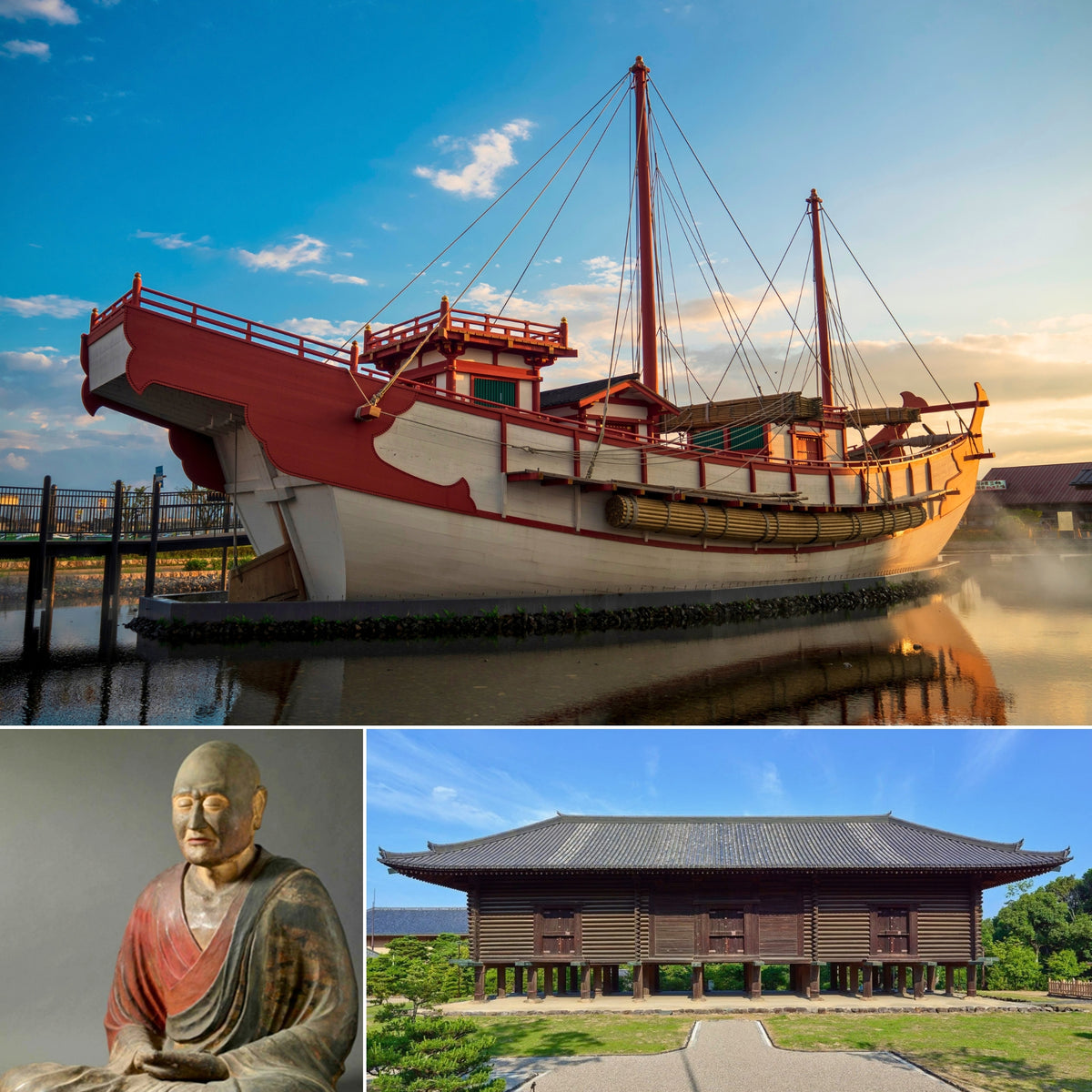
Nara Period (710–794) – The Introduction of Incense Blending
During the Nara period, the Chinese Buddhist monk Ganjin (Jianzhen) travelled to Japan in the reign of Emperor Shōmu.
He is traditionally credited with bringing a variety of incense ingredients and introducing methods of blending them, helping to establish the foundations upon which Japan’s distinctive incense culture would flourish.
The Shōsōin Repository in Nara preserves some of Japan’s oldest surviving incense sachets. These precious objects offer a rare glimpse into the place of fragrance in the lives of the Nara-period aristocracy.
Sandalwood, borneol and clove were among the treasured aromatic ingredients preserved in the Shōsōin. Brought to Japan through far-reaching trade networks, including the Silk Roads, they bear witness to the cultural exchanges that connected Japan with distant parts of Asia.
During this period, incense also came to be valued in everyday life for repelling insects, concealing unpleasant odours and offering spiritual protection.
Some of the larger sachets preserved in the Shōsōin are thought to have been used as ebikō, placed among precious possessions to protect them from insects.
Smaller examples, fitted with long cords, have also survived and are believed to have been worn suspended from the waist.
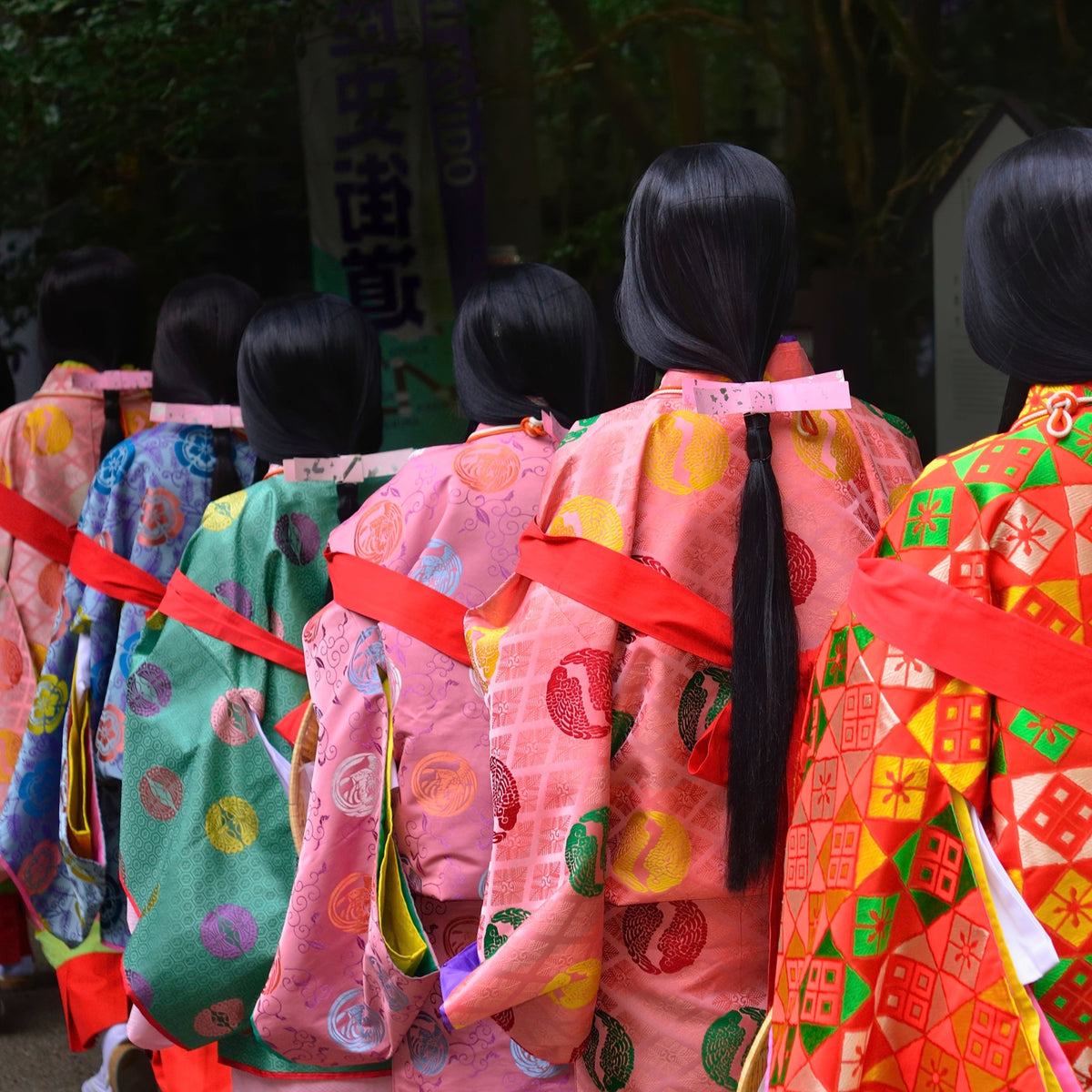
Heian Period (794–1185) – The Aesthetics of Fragrance and Incense-Blending Competitions
During the Heian period, incense became an integral part of Japan’s refined aristocratic culture.
Nobles would delicately perfume the paper on which they composed waka poetry, often addressed to someone they admired or loved. The fragrance accompanying a poem offered a subtle expression of the sender’s taste, refinement and social standing.
Scent became a sophisticated language in its own right, conveying sensibility and cultural accomplishment beyond the written word.
Aristocrats also composed their own incense blends, creating distinctive fragrances that reflected their individual tastes and identities.
Using special incense frames known as fusego, they would allow fragrant smoke to permeate their robes, surrounding themselves with carefully chosen scents throughout the day.
Two practices became particularly associated with this elegant culture.
Kun'ekō referred to the custom of perfuming garments with incense.
Sorataki described the practice of gently diffusing incense fragrance throughout a room.
Takimono-awase: Incense-Blending Competitions and the Six Classical Fragrances
At the Heian imperial court, mono-awase — refined competitions in which participants compared artistic creations and objects of beauty — became fashionable.
Among the most celebrated were takimono-awase, competitions devoted to the art of blended incense.
Participants prepared their own takimono, or blended incense, which was judged not simply for the beauty of its fragrance, but also for the literary elegance of its name, the accompanying utensils and the atmosphere of its presentation.
One of the most evocative descriptions of such a gathering appears in Umegae (‘The Plum Tree Branch’), a chapter of The Tale of Genji by Murasaki Shikibu.
Aristocrats carefully guarded their individual incense recipes, often preparing their blends in secret. Access to the closely held formulas of distinguished members of the court was itself a mark of privilege and prestige.
Six classical incense blends, collectively known as the Six Kinds of Takimono, became particularly well established. Each was traditionally associated with a season or atmosphere:
- Baika (Plum Blossom) — Spring
- Kayō (Lotus Leaf) — Summer
- Jijū (Chamberlain) — Summer
- Kikka (Chrysanthemum) — Autumn
- Rakuyō (Fallen Leaves) — Autumn
- Kurobō (Black Blend) — Winter
Together, these fragrances reflect the Heian aristocracy’s appreciation of seasonal beauty, literary imagination and the subtle art of scent.
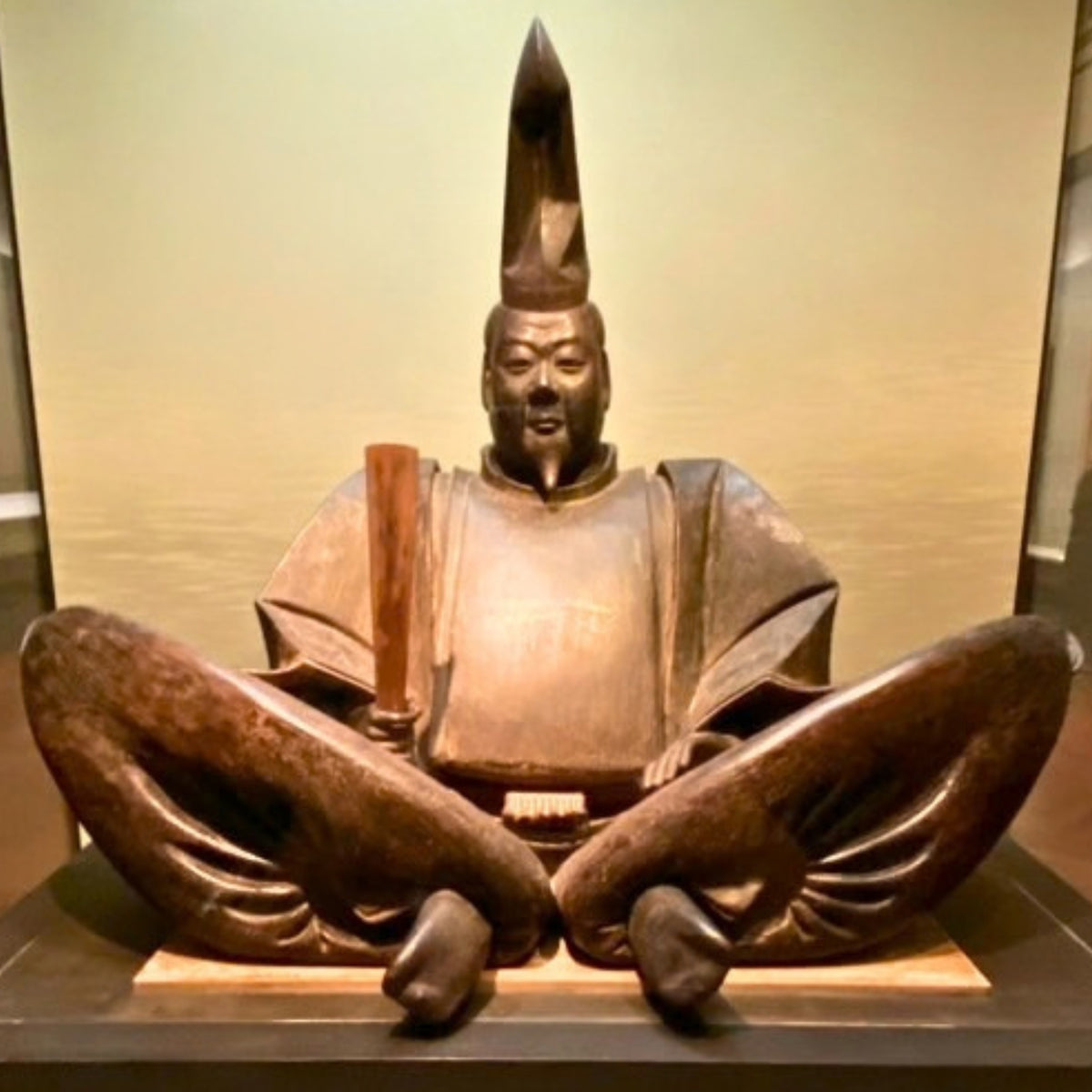
Kamakura Period (1185–1333) – New Buddhist Traditions and the Spread of Incense Offerings
During the Kamakura period, several influential schools of Buddhism emerged or became firmly established in Japan, many of which continue to shape Japanese religious life today.
With the growing influence of Zen Buddhism, incense assumed an increasingly important place in religious practice.
The custom of taking a small quantity of aromatic ingredients and placing them in a censer before the Buddha became more widespread, developing into a form of incense offering still familiar in Japan today.
Alongside its ceremonial significance, incense also played a role in Zen meditation and spiritual discipline, helping to create an atmosphere of stillness, concentration and contemplation.